Back to Top
Apply Giving myAugusta
Resources for:
Students
Students Faculty & Staff Parents & Family Alumni Community
Augusta University Logo
  • Academics
    Graduates pose together in their regalia.
    Augusta University celebrates fall 2025 graduates »

    Academics Home

    Colleges & Schools

    Programs of Study
    • Degrees & Programs
    • Course Catalog
    • Course Schedule
    • Program Pathways
    • Academic Calendar
    • Online Programs
    • Accelerated Degree Programs
    Resources
    • Academic Success Center
    • Advising
    • Counseling Services
    • Honors Program
    • Libraries
    • Testing & Disability Services
    • Writing Center
    Outside the Classroom
    • Army ROTC
    • Study Abroad
    • Experiential Learning
    • First Year Experience
    • Center for Undergraduate Research
    • Career Services
    • Jags Live Well
  • Admissions
    Augusta University's jaguar mascot, Augustus, and two students hold their hands like a paw
    Augusta University awarded $1.3 million grant to expand student support »

    Admissions Home

    Visit Campus

    Request Information

    Apply to AU
    • First-Year Freshmen
    • Transfer Students
    • Dual Enrollment
    • Graduate Students
    • Medical College of Georgia
    • Dental College of Georgia
    Opportunities
    • Degree & Programs
    • Honors Program
    • Program Pathways
    • Military-Affiliated Students
    • New Student & Family Transistions
    • On-Campus Housing
    Financial Aid
    • Student Financial Aid
    • Net Price Calculator
    • Scholarships
    • Cost of Attendance
    • Apply for Federal Aid
  • Campus Life
    President Keen and First Lady stand with students to cut ribbon on outdoor rec center
    Center for Outdoor Recreation and Education celebrates grand opening »

    Campus Life Home

    Athletics

    Community
    • Army ROTC
    • Living-Learning Communities
    • Military & Veteran Services
    • Mentorship
    • New Student & Family Transistions
    • Jags 4 Jags Mentoring Program
    Campus Services
    • Dining Services
    • Roarstore
    • Housing
    • Student Health
    • Parking & Transportation
    • Jagcard
    Get Involved
    • Clubs & Organizations
    • Greek Life
    • Campus Recreation
    • Student Government
    • Jaguar Production Crew
    • Intramural Sports
  • Research
    Three men in suits stand in front of a Augusta University Medical College of Georgia backdrop and smile at the camera. The man in the middle is holding a plaque.
    MCG scientists investigate arthritis drug’s impact on Alzheimer’s disease »

    Research Home

    Opportunities
    • Undergraduate Research
    • Graduate & Postdoctoral Research
    • Clinical Trials
    • Core Laboratories
    • Innovation Commercialization
    Initiatives
    • Cancer
    • Cardiovascular
    • Immunology
    • Neuroscience
    • Aging
    Resources
    • Centers & Institutes
    • Ethics & Compliance
    • Institutional Review Board
    • Sponsored Programs
    • Tools for Researchers
  • About AU
    Five women and two men jump and raise their hands in celebration.
    AU contributed over $1.6 billion to Georgia’s economy in FY 2024 »

    About AU

    Jagwire News

    Leadership
    • President
    • Provost
    • Administration
    • Enrollment Student Affairs
    • Faculty Senate
    We are AU!
    • Our Mission
    • Working at AU
    • Traditions
    • History
    • Augusta, GA
    Resources
    • MyAugusta
    • Calendar of Events
    • Brand Guidelines
    • Portals
    • Faculty Directory
Resources For
  • Current Students
  • Faculty & Staff
  • Parents & Family
  • Alumni & Friends
Apply
Giving
MyAugusta
Trending Search Terms
  • D2L LMS
  • Email
  • Pounce
  • Calendar
  • Registrar
  • Housing
  • Academic Calendar
  • Financial Aid
  • Parking
  • Library
  • Human Resources
  • Information Technology
GCC Faculty Directory
  • About
    • Leadership 
    • Our Faculty
    • Facilities
    • Join Our Team
    • Ring The Bell of Hope
    • Newsroom
  • Research
    • Overview
    • Programs
      • Cancer Immunology
      • Cancer Prevention, Control and Population Health
      • Molecular Oncology and Biomarkers
      • Grant Support Services
      • PRMC
    • Core Resources
      • Overview
      • Bioinformatics
      • Biostatistics
      • Biorepository
      • Flow & Mass Cytometry
      • Immune Monitoring
      • Integrated Genomics
      • Proteomics
      • Small Animal Imaging
  • Academics
    • Overview
    • Programs
      • Overview
      • Graduate Programs
        • About
        • Molecular Oncology & Immunology Program
      • Fellowship Programs
      • Graduate Student Profiles
    • Emerging Biomedical Professionals
    • Seminars
    • Community STEM
  • Clinical Trials
    • Overview
    • Trials by Tumor Type
    • Pediatric Immunotherapy Program
      • Overview
      • "Never Say No" Campaign
    • Georgia CaRES
  • Community
    • Overview
    • Programs
      • c-CARE
      • Cancer Information and Awareness
      • Cause for the Cure
      • Sun Safe Augusta
      • Sun Smart, Skin Safe
      • Teledermatology in Rural Georgia
      • Tobacco Cessation Program
    • Signature Events
      • Paceline
      • Unite in the Fight Against Cancer
    • Community Events
      • Great American Smokeout
      • White Ribbon Fall Fest
      • World Cancer Day
  • For Patients
  • Augusta University
  • Georgia Cancer Center
  • Research
  • GCC Faculty Directory
  • The Shi Lab

The Shi Lab

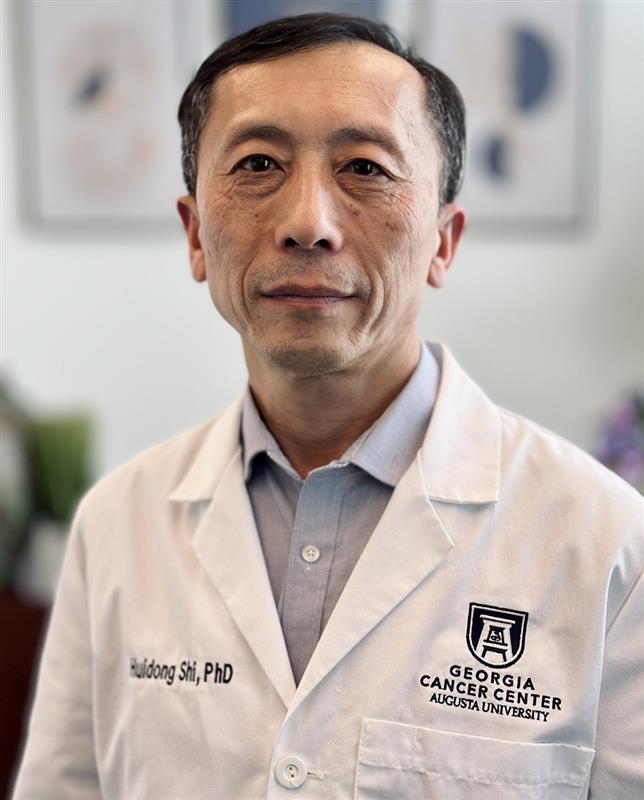
Huidong Shi, PhD


Huidong Shi, PhD

Professor, Biochemistry and Molecular Biology
Professor, Graduate Studies
Member, Molecular Oncology and Biomarkers Program
Georgia Cancer Coalition Distinguished Scholar


Jump to: Research Summary  Research Interests Selected Publications Research Team

Contact Us

The Huidong Shi Lab

 Health Sciences Campus

GCC - M. Bert Storey Research Building

1410 Laney Walker Blvd., CN-2125J2

(706) 721-6000

hshi@augusta.edu

Research Summary

Dr. Shi is interested in understanding the complex epigenetic regulation in normal and tumor cells. He has pioneered the development of high-throughput technologies for DNA methylation analysis. His laboratory utilized the next-generation sequencing-based approaches to generate the epigenomic profiles of chronic lymphocytic leukemia, breast cancer, and brain tumors. Presently, Dr. Shi is using single-cell genomics and epigenomics approaches in combination with statistical and bioinformatic tools to decipher transcriptional and epigenetic regulation in the engineered T cells for cancer immunotherapy and stromal cells in the tumor microenvironment.

Research Interests

Epigenomics of chronic lymphocytic leukemia

One of the primary focuses of our research is chronic lymphocytic leukemia (CLL), which is the most common form of adult leukemias in the United States. We are interested in understanding the molecular heterogeneity of CLL and identifying prognostic biomarkers and novel therapeutic targets in CLL. Using genome-wide DNA methylation profiling, we have shown that two molecular subtypes of CLL (IGHV mutated vs. unmutated CLL) have distinct DNA methylation profiles that seem to represent epigenetic imprints from normal B-cell subpopulations. Through integrated epigenomics and gene expression analyses, specific genes have been identified that distinguish new clinico-biological subtypes of CLL. We found that many hypomethylated genes in CLL are associated with super-enhancers and marked with substantial histone H3K27 acetylation enrichment. On-going studies are designed to further understand the function of these hypomethylated genes and target the super-enhancer-driven oncogene transcription using small molecule inhibitors. A vital feature of the clinical course of CLL is that patients with CLL also present with a humoral immune deficiency that worsens with disease progression. We are investigating the molecular mechanisms of T-cell dysfunction in CLL using epigenomic approaches.

Targeting spliceosome for cancer therapy

Splicing factor SF3B1 is frequently mutated in a spectrum of malignancies, from hematological (e.g., CLL) to solid tumors and has been suggested as a potential therapeutic target. We demonstrated that the SF3B1 modulator sudemycin D6 (SD6) effectively inhibits CLL cell growth and induces apoptosis in in-vitro and in-vivo models. Using RNA-seq analysis, we discovered that genes associated with SD6-induced splicing changes are significantly enriched in the B-cell receptor (BCR) and PI3K signaling pathways, including BLNK, BTK, AKT, PLCγ2, and PI3Kδ. SD6 also induced a time-dependent exon-skipping event in MCL-1 mRNA and resulted in significant downregulation of another anti-apoptotic gene TRAF1. We found that SD6 can synergize with the established CLL therapies ibrutinib, idelalisib, and venetoclax to induce apoptosis in primary CLL cells co-cultured with bone marrow stromal cells and T-cell-derived cytokines. We are currently collaborating with a pharmaceutic startup for future clinical development of spliceosome modulators and potential combination therapies to treat CLL.

Epigenetic regulation of IDO expression in triple negative breast cancer

Indoleamine 2,3-dioxygenase (IDO), a single chain oxidoreductase that serves as a catalyst for the degradation of tryptophan into kynurenine, has emerged as a critical player in T-cell suppression and the induction of immune tolerance to tumors. We discovered that promoter hypomethylation and up-regulation of IDO1, which encodes the IDO enzyme, is a unique molecular feature of TNBC or basal-like breast cancer compared to other subtypes of breast cancer. Our in vitro studies demonstrated that IDO1 promoter methylation controls its expression in response to the interferon γ treatment in breast cancer cells. This novel finding leads us to hypothesize that IDO1 promoter methylation may be developed into a biomarker for predicting TNBC prognosis and the response to IDO inhibitor-based immunotherapy. Currently, we are determining the prognostic value of IDO1 promoter methylation in TNBC patients and dissecting the mechanisms of epigenetic regulation of IDO1 expression in breast cancer cells. Besides, we have identified several small molecules that inhibit interferon γ-induced IDO1 expression at the transcription level. We are investigating the molecular mechanisms of these drugs and evaluating their ability to block IDO1 expression in breast cancer cells.

Selected Publications

Ding ZC*, Shi H*, Aboelella NS, Fesenkova K, Park EJ, Liu Z, Pei L, Li J, McIndoe RA, Xu H, Piazza GA, Blazar BR, Munn DH, Zhou G*. Persistent STAT5 activation reprograms the epigenetic landscape in CD4+ T cells to drive polyfunctionality and antitumor immunity. Sci Immunol 5 eaba5962 (2020), 30 October 2020. *co-corresponding authors.

Yu M, Guo G, Huang L, Deng L, Chang CS, Achyut BR, Canning M, Xu N, Arbab AS, Bollag R, Rodriguez PC, Mellor M, Shi H, Munn D, Cui Y. CD73 on cancer-associated fibroblasts enhanced by the A2B-mediated feedforward circuit enforces an immune checkpoint. Nat Commun, Nat Commun. 2020 Jan 24;11(1):515.

Shi SZ, Lee EJ, Lin YJ, Chen L, Zheng HY, He XQ, Peng JY, Noonepalle SK, Shull AY, Pei FC, Deng LB, Tian XL, Deng KY*, Shi H *, Xin HB*. Recruitment of monocytes and epigenetic silencing of intratumoral CYP7B1 primarily contribute to the accumulation of 27-hydroxycholesterol in breast cancer. Am J Cancer Res. 2019 Oct 1;9(10):2194-2208. PMID: 31720082. *co-corresponding authors.

Sharma MD, Rodriguez PC, Koehn BH, Baban B, Cui Y, Guo G, Shimoda M, Pacholczyk R, Shi H, Lee EJ, Xu H, Johnson TS, He Y, Mergoub T, Venable C, Bronte V, Wolchok JD, Blazar BR, Munn DH. Activation of p53 in Immature Myeloid Precursor Cells Controls Differentiation into Ly6c+CD103+ Monocytic Antigen-Presenting Cells in Tumors. Immunity. 2018 Jan 16;48(1):91-106.e6. doi: 10.1016/j.immuni.2017.12.014.

Noonepalle SK, Gu F, Lee EJ, Choi JH, Han Q, Kim JJ, Ouzounova M, Shull AY, Pei L, Hsu PY, Kolhe R, Shi F, Choi J, Chiou K, Huang THM, Korkaya H, Deng L, Xin HB, Huang S, Thangaraju M, Sreekumar A, Ambs S, Tang SC, Munn DH, Shi H. Promoter methylation modulates indoleamine 2, 3-dioxygenase 1 induction by activated T cells in human breast cancers. Cancer Immunol Res. 2017 Apr;5(4):330-344. doi: 10.1158/2326-6066.CIR-16-0182.

Selected Publications

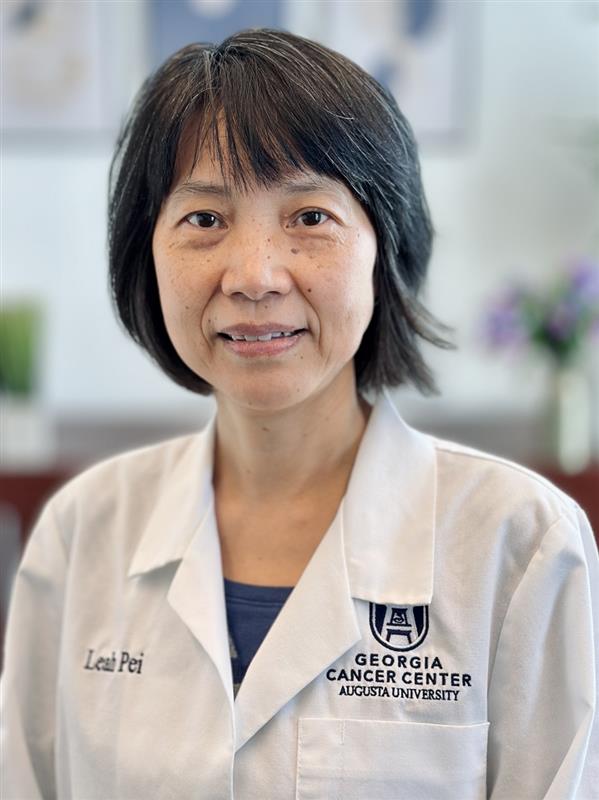
photo of Lirong Pei

Lirong Pei

  • Research Associate

706-721-6306

lpei@augusta.edu

photo of Apeksha Anand

Apeksha Anand

  • Postdoctoral Fellow

706-721-6000

apanand@augusta.edu

Reduce the Burden

The Georgia Cancer Center at Augusta University is dedicated to reducing the burden of cancer in Georgia and across the globe through superior care, innovation, and education. Through unprecedented expansion, the Georgia Cancer Center is providing access to more first-in-the-nation clinical trials, world-renowned experts and life-saving options.

Education & Research

M. Bert Storey Research
706-721-0570
cancer@augusta.edu

Care & Treatment

Outpatient Services Clinic
706-721-6744
https://www.wellstar.org/

Follow the Georgia Cancer Center

GCC on FacebookGCC on InstagramGCC on TwitterMCG on LinkedInGCC on YouTube

University Shield

Augusta University

1120 15th Street, Augusta, GA 30912

  •   Campus Maps
  •   Campus Contacts
  • A-Z Directory
  • Degrees & Programs
  • Employment
  • Accessibility
  • Accreditation
  • Campus Safety
  • Compliance Hotline
  • Human Trafficking Notice
  • Privacy Notices
  • Title IX / Sexual Misconduct
Apply Now Give Now

© 2026 Augusta University

Facebook Twitter LinkedIn Youtube Instagram
©