The Nochebuena Laboratory
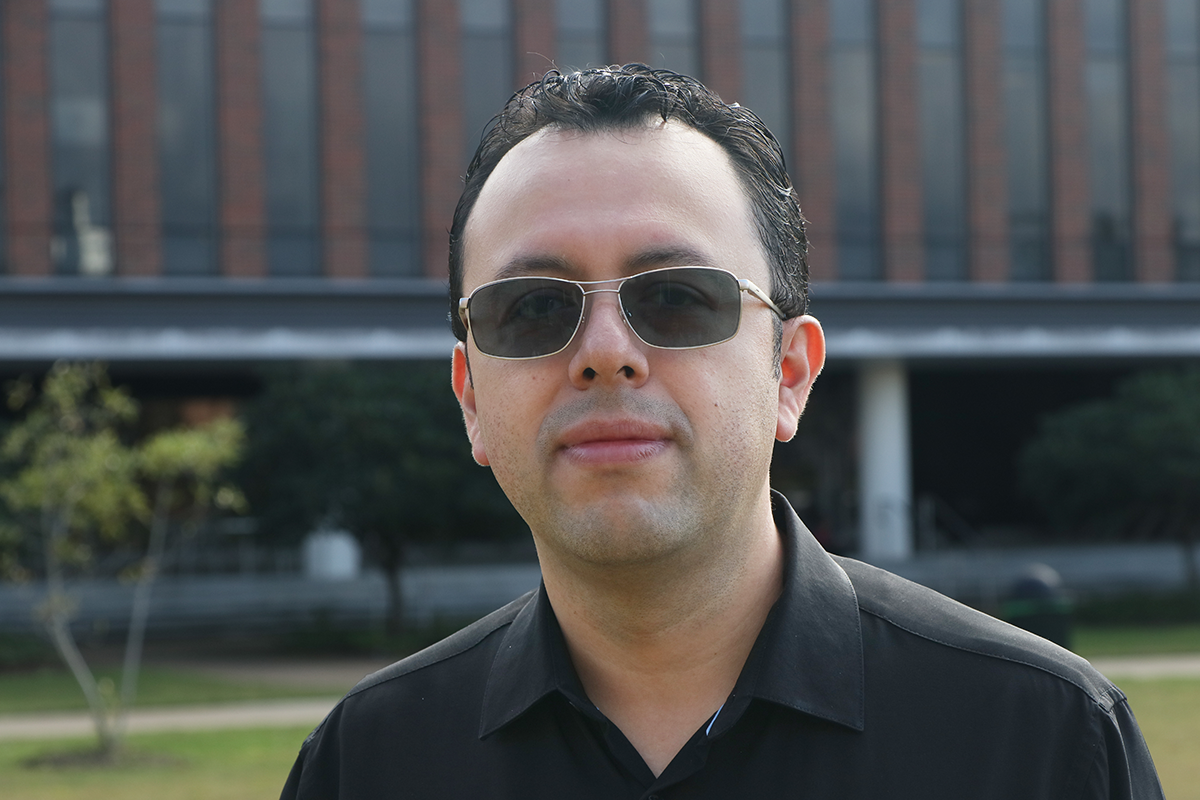
Jorge Nochebuena, PhD
Assistant Professor, Chemistry
Research Summary
Dr. Nochebuena received his Ph.D. in Chemistry from Universidad Autónoma Metropolitana-Iztapalapa in Mexico City, where he studied amyloid fiber formation and molecular cooperativity using theoretical and computational approaches. Following his doctoral training, he conducted postdoctoral research at the Centro de Investigación y de Estudios Avanzados del Instituto Politécnico Nacional (Cinvestav), where he worked on the development and application of computational methods for studying intermolecular interactions, organometallic compounds, and peptide aggregation. He subsequently held postdoctoral positions at the University of North Texas and The University of Texas at Dallas, where his work expanded to molecular dynamics simulations with polarizable force fields, QM/MM methods, and multiscale computational approaches for studying molecular interactions. Dr. Nochebuena is currently an Assistant Professor in the Department of Chemistry and Biochemistry at Augusta University.
Contact Us
The Nochebuena Lab
Health Sciences Campus
Science & Mathematics Building
Department of Chemistry and Biochemistry
Research Interests
The Nochebuena Research Group applies computational chemistry approaches to understand how molecular interactions influence the structure, dynamics, and function of chemical and biological systems. Our research combines electronic structure calculations, molecular dynamics simulations, and machine learning techniques to investigate problems ranging from biomolecular recognition and protein aggregation to metal-protein interactions and complex materials.
Current research directions include:
1. Protein-Protein Interactions and Molecular Recognition
Protein-protein interactions regulate many essential biological processes and represent attractive targets for therapeutic intervention. We use molecular dynamics simulations and free energy methods to investigate the structural and energetic factors that govern molecular recognition, complex formation, and conformational change in biological systems.
2. Protein Aggregation and Disease
Protein misfolding and aggregation are associated with numerous chronic and neurodegenerative diseases. Our research seeks to understand the molecular interactions that drive protein aggregation and how these processes contribute to the formation and stability of pathogenic protein assemblies.
3. Metal Ions in Biological Systems
Metal ions play critical roles in protein structure, catalysis, and cellular regulation. We investigate how metal ion coordination influences biomolecular structure and dynamics, and how these interactions contribute to both normal biological function and disease.
4. Advanced Computational Methods and Machine Learning
Many biologically relevant systems remain challenging to study using conventional computational approaches. Therefore, we develop and apply advanced simulation strategies, multiscale models, and machine learning techniques to investigate problems that remain beyond the reach of traditional computational methods.
Selected Publications
- Chatterjee, S.; Nochebuena, J.; Cisneros, G. A. Impact of an Ionic Liquid Solution on Horseradish Peroxidase Activity. Journal of the American Chemical Society 2024, 146(19), 13247-13257.
- Nochebuena, J.; Simmonett, A. C.; Cisneros, G. A. Seamless Integration of GEM, a Density-Based Force Field, for QM/MM Simulations via LICHEM, Psi4, and Tinker-HP. Journal of Chemical Physics 2024, 160(17), 174103.
- Nochebuena, J.; Piquemal, J.-P.; Liu., S; Cisneros, G. A. Cooperativity and Frustration Effects (or Lack Thereof) in Polarizable and Non-Polarizable Force Fields. Journal of Chemical Theory and Computation. 2023, 19 (21), 7715-7730.
- Nochebuena, J.; Cisneros, G. A. Polarizable MD and QM/MM Investigation of Acrylamide-Based Leads to Target the Main Protease of SARS-CoV-2. Journal of Chemical Physics 2022, 157(18), 185101.
- Nochebuena, J.; Quintanar, L.; Vela, A.; Cisneros, G. A. Structural and Electronic Analysis of the Octarepeat Region of Prion Protein with Four Cu(II) by Polarizable MD and QM/MM Simulations. Physical Chemistry Chemical Physics 2021, 23(38), 21568-21578.