
Project 2
Sex and Leptin control of endothelial cell glycolysis and redox balance in Type 1 Diabetes
Overall Goal:
Project 2 aims to define the sex-specific mechanisms underlying endothelial dysfunction in Type 1 Diabetes. The project focuses on the contribution of the PFKFB3-driven glycolysis–lactate–NOX1–ROS signaling pathway and examines how the adipokine leptin regulates endothelial cell metabolism in male and female blood vessels.
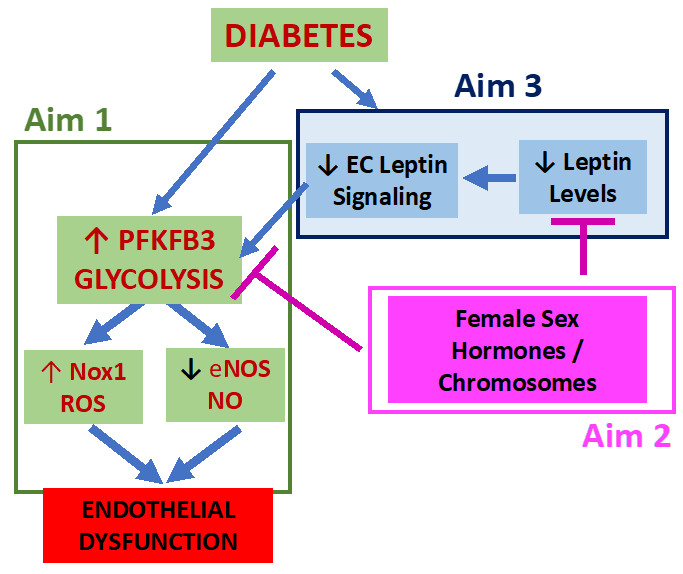
Schematic illustrating the three aims of the project:
- To test whether diabetes induces endothelial dysfunction through glycolysis/PFKFB3–dependent increases in ROS production and reduced NO bioavailability.
- To test whether diabetes decreases leptin levels and impairs endothelial leptin signaling.
- To test whether female sex hormones and sex chromosomes influence leptin production and endothelial cell glycolysis.
Central Hypothesis
Our central hypothesis is grounded in a series of novel findings implicating endothelial cell metabolism as a key regulator of vasomotion. Our preliminary data indicate that Type 1 Diabetes increases endothelial cell glycolysis through upregulation of the rate-limiting enzyme PFKFB3. This metabolic shift promotes redox imbalance, driven in part by lactate-mediated activation of NOX1 and increased reactive oxygen species (ROS) production, alongside reduced eNOS activity and nitric oxide (NO) bioavailability.
Importantly, while females are also severely affected by T1D-associated endothelial dysfunction, our findings suggest that the underlying mechanisms differ in a sex-specific manner. In parallel, we have found that disruption of endothelial leptin signaling contributes to endothelial dysfunction through alterations in cellular metabolism and redox balance.
Together, these data support the hypothesis that endothelial cell metabolism regulates vascular function through sex-specific mechanisms involving NOX1 and leptin signaling. The studies proposed in this project will build on these findings by defining the sex-specific pathways driving endothelial dysfunction in T1D, with a particular focus on metabolic regulation and the role of the adipokine leptin.
Lead Bios
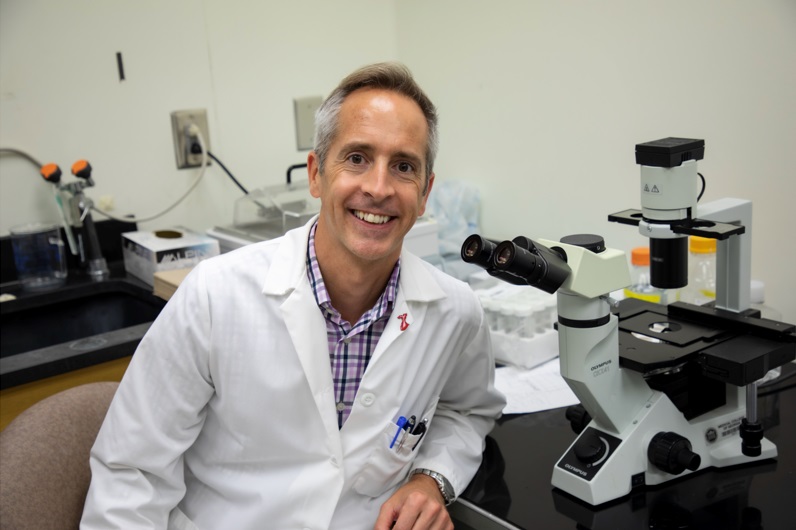
Dr. Eric Belin de Chantemele is Regents’ Professor and Associate Director of the VBC at MCG/AU. He has more than 15 years of expertise investigating the interactions between altered metabolism and cardiovascular diseases and more specifically, has investigated the role of the adipokine leptin as a regulatory mechanism influencing endothelial function, oxidative stress, inflammation, and blood pressure regulation.
Dr. Belin de Chantemele also has expertise in the role of sex differences in cardiovascular disease and has uncovered a novel link between female sex, leptin, aldosterone and endothelial dysfunction. Dr. Belin de Chantemele’s group generated the preliminary findings demonstrating that, in the context of type 1 diabetes, excessive endothelial cell glycolysis, impairs endothelium-dependent relaxation through a redox imbalance, in males. He is well qualified to lead Project 2.

Dr. David Fulton is Co-I for Project 2, is a Regents' Professor and Director of the VBC at MCG/AU and a leading expert in the area of endothelial biology and NO/eNOS and NADPH oxidase in cardiovascular disease for the past twenty years. Dr. Fulton will serve as a Co-I and provide additional studies and mechanistic insight on how glycolysis and PFKFB3 regulate eNOS function and redox balance. Dr. Fulton will also serve as co-director of Core C.
Project 2 Team

Dr. Eric Belin de Chantemele
- Project Lead

Dr. David Fulton
- Co-Investigator

Simone Kennard
- Sr Research Tech
Adam Salon
- Postdoc Fellow

Joseph Costello
- Sr Research Tech

Stephen Haigh
- Postdoc Fellow

Vijay Patel
- Consultant