
Wendy Bollag
Professor
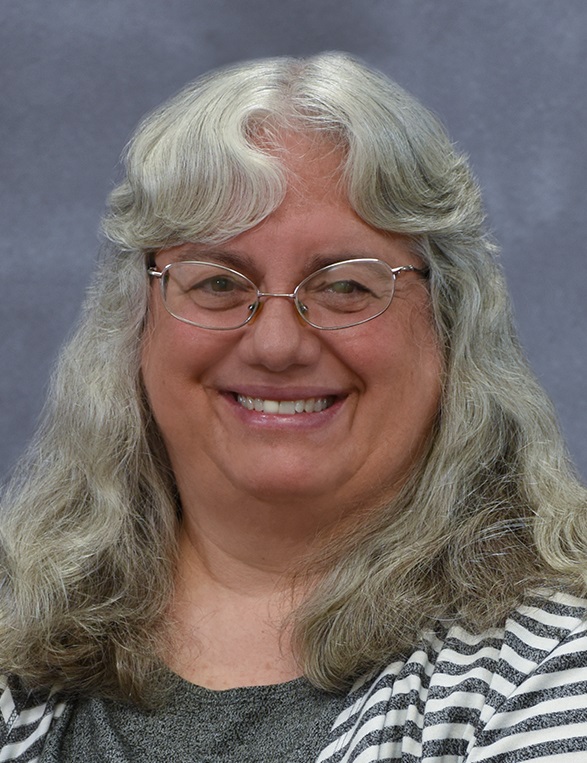
Wendy Bollag
Professor
Academic Appointment(s)
Medical College of Georgia
Department of Physiology
Medical College of Georgia
Department of Surgery: Orthopedic
Medical College of Georgia
Department of Medicine
Medical College of Georgia
Department of Cellular Biology and Anatomy
Medical College of Georgia
Department of Dermatology
Administration
Department of The Graduate School
Dental College of Georgia
Department of Oral Biology
Bio
Dr. Bollag has extensive experience in epithelial biology, a broad background in cell signaling, and a strong track record of education and mentoring of undergraduate, graduate and medical students.
- WBOLLAG@augusta.edu
- (706) 721-0698
- CA 1008
- Personal Website
Education
-
Ph.D., Molecular Physiology Yale University, 1990
-
MS, Molecular Physiology Yale University, 1988
-
BS, Biochemistry Pennsylvania State UniversityT, 1984
Awards & Honors
-
Leadership Panel AU Women's Career Development Symposium, 2023
-
NIH P30 Review Panel NIH, 2023
-
Appointed Regents' Professor 2022
-
Outstanding Faculty Award The Graduate School, 2022
-
VA Research Career Scientist Award VA, 2021
Courses Taught Most Recent Academic Year
-
BIOM 8085
Fundamentals of Aging
-
MEDI 6240
GI/GU/Endocrine
-
BIOM 8033
Integrated Systems Biol
-
PSIO 6810
Medical Physio II
-
PSIO 6720
Pathophys 2
-
PSIO 9300
Research
-
BIOM 8012
Scientific Communications
-
BIOM 8021
Biochem & Gene Regulation
-
MEDI 6120
Foundations of Medicine
-
BIOM 8022
Molecular Cell Biology
-
MEDI 6130
Musculoskeletal/Skin
-
PSIO 6710
Pathophys 1
-
BIOM 8011
Respon Conduct of Research
-
BIOM 8130
Scientific Grant Writing
Teaching Interests
I love to teach and have been doing so since I was an undergraduate at the Pennsylvania State University and taught an introductory chemistry laboratory class. I was offered the opportunity to lead a section of the lab because of an insufficient number of teaching assistants to cover all of the sections and my own successful completion of the course. I jumped at the chance, and in my junior year I wound up leading not one, but two, sections of this introductory chemistry laboratory in successive terms, suggesting that I was effective in my supervision of the laboratory.
I enjoyed the opportunity so much that I actively sought out opportunities to teach as a graduate student at Yale University School of Medicine. Within the first several years of my graduate career, I was able to obtain teaching opportunities in the Physiology course for the Yale Physician Assistant (PA) Program as well as the review course in Physiology for the Norwalk Hospital/Yale University School of Medicine PA Surgical Residency Program. In the 1986-1987 academic year, I was recruited to coordinate the Physiology course for the PA Program and the PA Residency Review Program. I was successful in my organization and direction of the PA Physiology course, as evidenced by the fact that the PA students bestowed upon me the 1989 Teaching Award.
Following completion of my postdoctoral fellowship, my first faculty position was at Seton Hall University, primarily teaching undergraduates with minimal effort allocated to research. However, I realized that this was not quite the correct mix of teaching and research for me, and when I had the opportunity to interview for a position at Medical College of Georgia, I did so. I have been at MCG since 1993 (through its various names). Early in my MCG career, I sought out teaching opportunities, and I currently teach numerous classes in various courses, including graduate and medical students
as well as postdoctoral fellows.
My method of teaching is largely Socratic. I try to encourage student interaction, often asking questions and waiting for students to offer answers. For graduate teaching, many times my questions are designed to encourage students to think about different approaches to demonstrate that a particular piece of information is correct. I also try to provide multiple examples to illustrate educational points, since the use of examples is often the best way to learn. Finally, I carefully consider student feedback and attempt to incorporate their suggestions into my future educational efforts. For example, if after the lecture, I receive a number of questions about a particular point, I will often use the beginning portion of the next lecture to discuss the issue and attempt to explain the concept in an alternate way. In my medical school teaching, I have altered my lectures each year in an attempt to address suggestions provided by students.
I taught in the Problem-based Learning (PBL) course for first- and second-year medical students until 2021 (limiting my PBL facilitating to the second-year students in 2021 as a result of the adoption of a new curriculum) and now teach in the Case-Based Learning (CBL) course. I have been impressed with the excellent dynamics in most of my group, which are able to discuss and learn the information that they need to know, while having fun doing so. Indeed, several of my students have told me that they look forward to the class, and I like to think that it is at least in part my ability to facilitate learning while promoting a fun learning environment. I think that the students appreciate my efforts, as I have received Exemplary Teaching Awards in 2016, 2017 and 2018. The students seem to consistently rank me highly as well. This past year I was also selected to receive Teaching Awards by both the first-year biomedical PhD students and the students in the Masters in Physiology program.
At the bench I try to provide one-on-one tutoring in experimental methods, design and interpretation early in a trainee’s career but then I allow them the independence to make their own mistakes. Of course, I am always available to provide assistance with planning experiments, understanding the results or troubleshooting difficulties, but I also solicit the trainees’ opinions concerning these processes as well as future research directions (and have found that they often have ideas that are as good as or better than my own). Several years ago, I received the best compliment ever, when a summer medical student who had obtained her PhD in a less-than-ideal thesis environment said to me that working in my laboratory “made research fun again.”
Scholarship
Selected Recent Publications
- The Assessment of Infection Risk in Patients with Vitiligo Undergoing Dialysis for End-Stage Renal Disease: A Retrospective Cohort Study, 2024
Journal Article, Academic Journal - Atopic Dermatitis and the Risk of Infection in End-Stage Renal Disease, 2023
Journal Article, Academic Journal - The Skin and Inflamm-Aging, 2023
Journal Article, Academic Journal - Pressure Ulcer Diagnosis Is Associated with Increased Mortality in Patients with End-Stage Renal Disease: A Retrospective Study, 2023
Journal Article, Academic Journal - Risk factors and mortality in patients with listeriosis and end-stage renal disease., 2023
Journal Article, Academic Journal
Research Interests
My research interests lie in understanding the mechanisms by which hormones, growth factors, cytokines and other signaling molecules instruct cells to respond appropriately to perform their functions. One current project investigates the regulation of keratinocyte proliferation and differentiation in the skin as well as wound healing in the cornea. Another project is defining the signaling mechanisms regulating aldosterone secretion from the adrenal gland. In the first project in skin, we are defining the role of the glycerol channel aquaporin-3 (AQP3) in conjunction with the signaling enzymes phospholipase D-2 (PLD2) and the product of this interaction phosphatidylglycerol (PG), in promoting epidermal keratinocyte differentiation and corneal wound healing; in both these tissues we have demonstrated anti-inflammatory effects of PG and seek to understand the mechanism of its action. Phospholipase D also seems to be important in the adrenal gland, particularly in its response to very low-density lipoprotein, which is elevated in obesity and may be linked to the hypertension that is often associated with excess weight.
Department Service
-
Department of Physiology Graduate Education Committee 2010 - Present
Role: Committee Member
-
Department of Physiology Post-Doctoral Affairs Committee 2010 - Present
Role: Committee Chair
-
Departmental Awards Committee 2019
Role: Committee Member
-
Department of Physiology Chair’s Advisory Committee 2012 - 2015
Role: Committee Member
University Service
-
MCG Faculty Senate Executive Committee 2019 - Present
Role: Committee Member
-
MCG Promotion & Tenure Committee 2018 - Present
Role: Committee Member
-
Augusta University Research IT Committee 2016 - Present
Role: Other
-
Translational Research Program Committee of the Department of Medicine 2014 - Present
Role: Committee Member
-
Postdoctoral Presentations Subcommittee, MCG Graduate Research Day Committee 2001 - Present
Role: Chairperson
Professional Service
-
Augusta Biomedical Research Corporation 2014 - Present
Role: Officer, Treasurer
-
VA Eligibility Panel 2013 - Present
Role: Other
-
VA Research and Development Committee 2012 - Present
Role: Other
-
Augusta Biomedical Research Corporation 2011 - Present
Role: Other
-
VA Institutional Animal Care and Use Committee 2009 - Present
Role: Member
Public Service
-
AR Johnson Middle School 2017
Role: Guest Speaker
-
Pennsylvania State University Club of Aiken/Augusta 2007 - 2015
Role: Board Member
-
High School U—Middle School Edition 2014
-
Lakeside High School 2014
Role: Guest Speaker
-
High School U 2013