
Seungwoo Kang
Assistant Professor
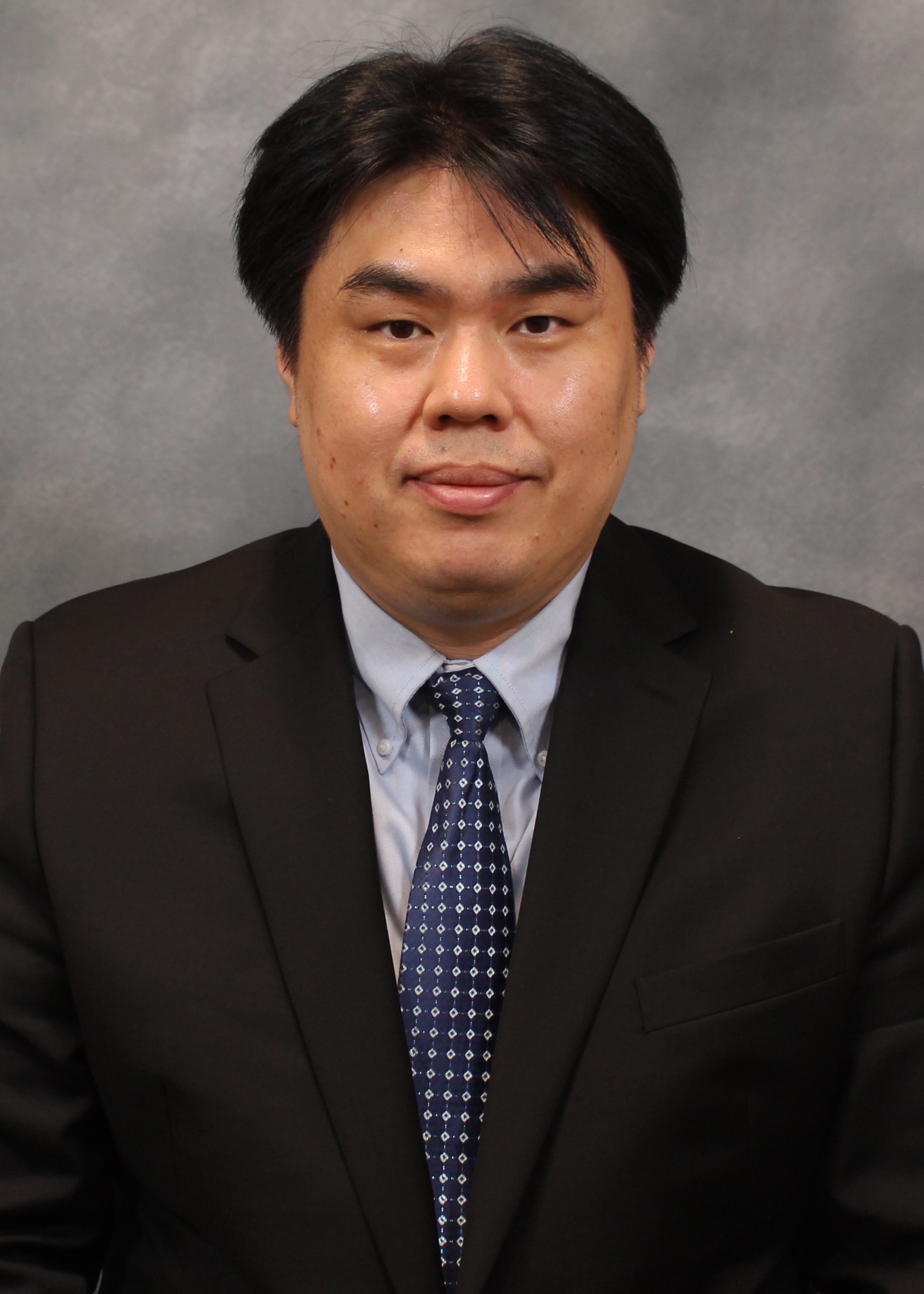
Seungwoo Kang
Assistant Professor
Academic Appointment(s)
Medical College of Georgia
Department of Pharmacology and Toxicology
Administration
Department of The Graduate School
- sekang@augusta.edu
- (706) 721-0906
- CB 3614
- Personal Website
Education
-
Ph.D., Pharmacology and Toxicology University of California - Irv, 2014
-
MS, Neurobiology Korea University, 2008
-
BS, Life Sciences Korea University, 2005
Awards & Honors
-
Harry June ACNP Travel Award American College of Neuropsychopharmacology (ACNP), 2021
-
Selected for the NIH Brain Initiative Summer Course on Interdisciplinary Computational Neuroscience at University of Missouri-Columbia University of Missouri-Columbia (NIH), 2019
-
Neuroscience 2018 Travel Award Japan Neuroscience Society (JNS) , 2018
-
RSA Junior Investigator Travel Award Research Society on Alcoholism (RSA), 2017
-
SfN Trainee Professional Development Award Society for Neuroscience (SfN), 2016
Courses Taught Most Recent Academic Year
-
PHRM 8043
Pharmacology & Therapeutics II
-
PHRM 9020
Seminar in Pharmacology
-
NURO 8082
Neuroscience II
-
PHRM 8042
Pharmacology & Therapeutics I
-
PHRM 9300
Research
-
CURS 3990
Undergrad Research II
-
PHRM 9210
Invest of a Problem
Teaching Interests
The learning process is indeed the exact example of the reward process: how we perceive, act, think, and remember through the integration of intrinsic value and extrinsic stimulation. Thus, teachers can consolidate the students’ learning process by helping them respond to rewarding stimuli through inspiration, be able to learn and anticipate future rewards through motivation, and be engaged in appropriate decision-making toward reward by fully encouraging problem-solving and independent thinking. Given those concepts, my primary aims in teaching are to help students: 1) get inspired and motivated to the subject; 2) build a strong core of various theoretical concepts as well as valuable experience in problem solving; and 3) encourage independent thinking that will be needed beyond the scope of the learning process.
Scholarship
Selected Recent Publications
- The Role of Glutamatergic Astrocyte-Neuron Interaction in Adult Anxiety Susceptibility Induced by Adolescent Repeated Alcohol Exposure, 2023
Abstract - External globus pallidus input to the dorsal striatum regulates habitual seeking behavior in male mice, 2023
Journal Article, Academic Journal - Astrocyte activities in the external globus pallidus regulate action-selection strategies in reward-seeking behaviors, 2023
Journal Article, Academic Journal - Activation of Astrocytes in the Paraventricular Nucleus of Thalamus Modulates Social Behaviors, 2022
Abstract - Distinct Coordination of Dorsomedial and Dorsolateral Striatum Encoding Social and Exploratory Behaviors, 2021
Abstract
Research Interests
Many of the prevalent psychiatric disorders are concomitant with maladaptive reward processing. Thus, this signifies an essential need to clarify how physiological brain activities in context-dependent reward processing transit to pathological conditions for interpreting the data concerning the disease states. My research seeks to characterize the precise tripartite synapses and long-range circuits in the brain that underlie adaptive and maladaptive behaviors driven by positive and negative reinforcement during the transition from flexible reward processing to deficit or inflexible dependency. In addition, based on those findings, my long-term goal is to identify brain-wide signatures to predict the risk of related diseases.
Professional Service
-
Frontiers in Psychiatry 2023 - Present
Role: Editor, Journal Editor
-
Neuropsychopharmacology 2023 - Present
Role: Reviewer, Ad Hoc Reviewer
-
Scientific Reports 2023 - Present
Role: Reviewer, Ad Hoc Reviewer
-
Frontiers in Physiology 2022 - Present
Role: Editorial Review Board Member
-
Brain Sciences 2022 - 2024
Role: Editor, Journal Editor