Respiratory Therapy Profession
Respiratory therapists treat patients with cardiopulmonary disease and other disorders requiring life-support technologies. Patients range from newborns to the elderly.
In hospital settings, RTs assist physicians by assessing the patient's condition, planning and initiating treatment, and providing patient education. Related interests may include physician assistant, nursing, physical therapy, occupational therapy, and radiologic sciences. Treatments provided by respiratory therapists include oxygen and humidity therapy, chest physical therapy, and cardiopulmonary resuscitation using state-of-the-art life support technologies. RTs obtain and analyze arterial blood samples to evaluate and optimize patient oxygenation and ventilation. They also evaluate cardiopulmonary function using specialized equipment.
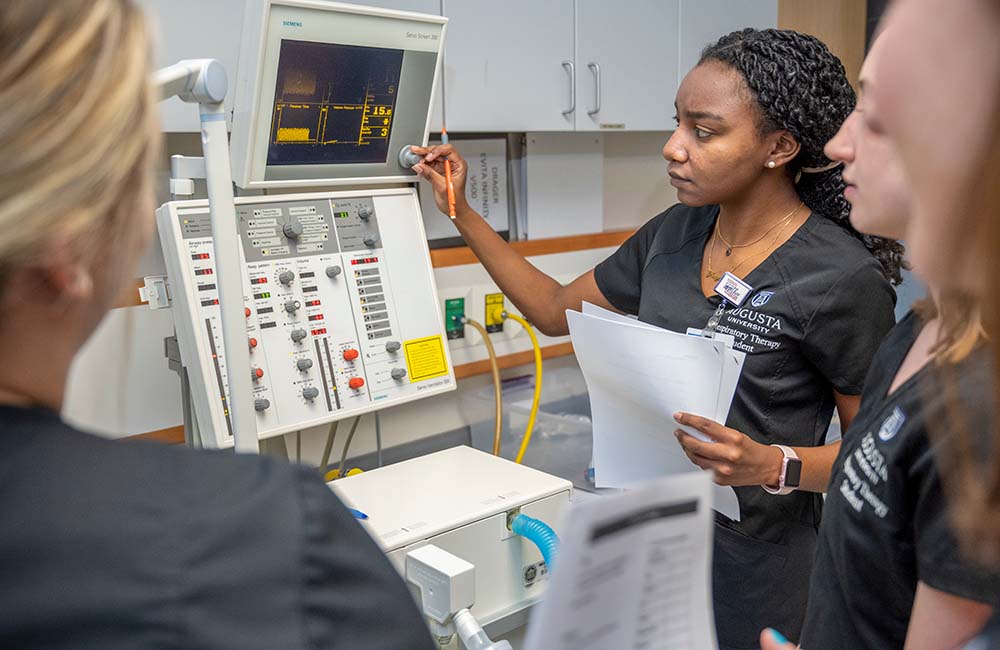
Abilities
Multi-Skilled Profession
Respiratory therapy requires manual dexterity, mechanical aptitude, and a broad range of cognitive capabilities. Therapies are based on strong patient assessment, highly technical skills requiring good manual dexterity. The relative autonomy RTs enjoy demands a high degree of responsibility and professionalism, as well as the ability to collect, evaluate, and synthesize patient information.
Practitioners must pay attention to detail, follow instructions, and work as part of a team. In addition, operating advanced equipment requires proficiency with computers. RTs have significant patient contact, which requires empathy, strong interpersonal and communication skills, and sensitivity to the physical and psychological needs of their patients.
Career Information
Job satisfaction, opportunity, flexibility, and earning potential are often highly desirable features when considering a career. While many professions may offer one or two of these elements, respiratory therapists find all to be within their reach. Choose respiratory therapy, and you'll look forward to a promising, fulfilling career.
Job Satisfaction
Respiratory therapists provide direct care to a variety of patients with cardiopulmonary disease. They utilize many high-level skills on a daily basis and make important decisions that will lead to better quality of life for their patients. Playing a key role in the delivery of life-saving technology creates a sense of job satisfaction unparalleled in many professions.
Opportunity
In these economic times, opportunity is a key factor. Respiratory therapists usually choose to work in the hospital setting, but other roles continue to expand even as the overall job market has declined. In addition to the acute-care hospital, opportunities include home health care, education, research, management, pulmonary rehabilitation, long-term care facilities, physician offices, and private industry. Therapists with a bachelor's degree can work as disease or case managers, clinical educators, supervisors, departmental directors, medical equipment marketers, clinical or education specialists, and pharmaceutical representatives.
Flexibility
The opportunity to adjust schedules around family life and /or to further educational goals is a big plus for respiratory therapists. PRN schedules are popular in many hospitals, giving RTs the ability to choose shifts that fit their individual needs. RTs also have flexibility in choosing an area of interest; positions are available working with neonates, pediatric, trauma or cardiac patients, and many other specialized populations.
Earning Potential
Registered therapists assume considerable responsibility and command high salaries. Experienced RTs earn from $50,000 to $70,000 depending on job responsibilities, education, and location. In 2012, the mean annual salary for respiratory therapists was $58,943. Private industry offers particularly lucrative career opportunities.
Advancement Opportunity
Respiratory therapists advance in clinical practice by moving from general care to the care of critically ill patients who have significant problems in other organ systems, such as the heart or kidneys. Respiratory therapists, especially those with a bachelor's or master's degree, also may advance to supervisory or managerial positions in a respiratory therapy department.
Technical Standards
Respiratory Therapy is a profession requiring manual skills in concert with a broad range of cognitive capabilities. Collection, evaluation, and synthesis of data are vital to this discipline.
The therapeutic modalities provided by respiratory care practitioners require technical skills involving manual dexterity and a mechanical aptitude to perform in a safe and acceptable manner. Respiratory therapists must be mobile and have the ability to operate in relatively small spaces. These requirements are necessary because of the critical and accurate care often provided in crisis situations. Respiratory care practitioners must possess auditory capabilities to discriminate sounds in order to assess the proper functioning of life support equipment.
The therapist must be capable of ascertaining breath sounds and pulse sounds through the use of a stethoscope and blood pressure equipment. Respiratory care practitioners must possess adequate vision to assess the proper functioning of life support equipment and to collect and interpret patient physiological parameters in order to direct and guide a successful treatment plan.
The respiratory care practitioner must have the manual dexterity to:
- draw venous and arterial blood
- perform endotracheal suctioning
- provide percussion and postural drainage for bronchial hygiene
- perform manual resuscitation (CPR) in the event of a cardiac emergency
- maintain and modify equipment in routine emergency situations
- be able to move life support equipment in a rapid manner during a crisis situation
- be sensitive to changes in pressure when performing emergency breathing with a manual resuscitator in the newborn and small infant as compared to the adult victim
- have tactile sensitivity required to perform arterial puncture on the newborn and small infant
Respiratory care practitioners must have the ability to work under stress, manage time efficiently, exercise independent judgment, and assume responsibility for their own work and actions. They must be able to read and interpret written and verbal instructions and take appropriate action. It is important that the respiratory care practitioner be able to communicate and maintain professional relationships with peers, patients, and physicians.
It is also important that they think logically and process information quickly to solve clinical problems. They must exercise ethical judgment, integrity, honesty, dependability, and accountability in the classroom and clinical situations. The Respiratory Therapy Program in the Augusta University College of Allied Health Sciences makes every effort to provide the physically compromised student opportunities to learn and develop into a safe, rational respiratory care practitioner. It is incumbent upon the student to realize that certain manual, technical, and professional tasks must be mastered in order to achieve passing grades and to successfully complete the respiratory therapy curriculum.