
Mykola Mamenko
Associate Professor
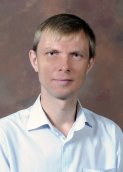
Mykola Mamenko
Associate Professor
Academic Appointment(s)
Medical College of Georgia
Department of Physiology
Administration
Department of The Graduate School
- MMAMENKO@augusta.edu
- (706) 721-2576
- (706) 721-7299
- CA 3147
- Personal Website
Education
-
Ph.D., Biophysics Taras Shevchenko National Univ, 2010
Awards & Honors
-
Epithelial Transport Group Meritorious Research Award The American Physiological Society, 2017
-
Renal Section Research Recognition Award The American Physiological Society, 2017
-
Dean’s Excellence in Research Award The University of Texas Medical School, 2015
-
Renal Section Postdoctoral Excellence in Research Award The American Physiological Society, 2015
-
Young Investigator Award The Society of Experimental Biology and Medicine, 2015
Courses Taught Most Recent Academic Year
-
PSIO 9210
Invest of a Problem
-
PSIO 9300
Research
-
PSIO 7210
Advanced Renal Phys
-
BIOM 8033
Integrated Systems Biol
-
PSIO 6110
Medical Physio 1
-
VBIO 8010
Methods in Cardiovascular Rese
-
PSIO 6710
Pathophys 1
-
BIOM 8130
Scientific Grant Writing
Teaching Interests
My professional aspiration is to promote the growth and development of trainees, so that they are successful in the academic and biomedical fields, or outside of those areas (industry, scientific writing etc.). My teaching strategy is based on the following principles: 1) encourage problem-solving thinking and application of the acquired knowledge; 2) emphasize and foster communication skills, they are vital to succeed in any modern career; 3) maintain realistic expectations about the educational and career goals; 4) stress the critical importance of professional ethics and rigor; 5) lead by example and avoid the “one size fits all” approach. I have been delivering didactic lectures to the graduate and master’s students within the curricula of the following courses: Scientific Communication (BIOM 8012), Integrated Systems Biology (BIOM 8033), Methodology in Cardiovascular Research (VBIO 8010), Medical Physiology I (PSIO 6110), Pathophysiology (PSIO 6710), Advanced Renal Physiology (PSIO 7210), Medical Renal Physiology (PSIO 8390). I have developed the curriculum and served as the main instructor for the Current Trends in Physiology: Mineralocorticoid and Progesterone Signaling – Evolution, Function, Interaction (PSIO 8350) and Advanced Study of Physiology: Animal Models of Kidney Disease (PSIO 8340) courses.
Scholarship
Selected Recent Publications
- Aldosterone Antagonism Is More Effective at Reducing Blood Pressure and Excessive Renal ENaC Activity in AngII-Infused Female Rats Than in Males, 2023
Journal Article, Academic Journal - TRPV4 functional status in cystic cells regulates cystogenesis in autosomal recessive polycystic kidney disease during variations in dietary potassium., 2023
Journal Article, Academic Journal - Practical notes on popular statistical tests in renal physiology, 2022
Journal Article, Academic Journal - Electrolyte and transporter responses to angiotensin II induced hypertension in female and male rats and mice., 2020
Journal Article, Academic Journal - TRPC3 determines osmosensitive [Ca2+]i signaling in the collecting duct and contributes to urinary concentration., 2019
Journal Article, Academic Journal
Research Interests
My research program investigates how specific mechanisms responsible for water and electrolyte transport in the kidney are affected in pathology and seeks to translate the obtained mechanistic evidence to develop new or update the existing therapeutic strategies. The main lines of inquiry pursued in the lab explore sex differences in aldosterone-dependent renal sodium reabsorption that are critical for chronic blood pressure control, delineate molecular determinants of lithium toxicity in the kidney, examine renal mechanisms contributing to the development of hyperkalemia in the setting of chronic kidney disease and aim to understand long-term impact of hyperkalemia on renal and cardiovascular outcomes. The methodological arsenal at our disposal allows exploring our hypotheses at the cellular, tissue and systemic levels to generate preclinical evidence of high translational value.
Department Service
-
Seminar Series 2018 - 2019
Role: Committee Chair
-
Symposium: "Immune system and inflammation as modulators of physiological function in health and disease" 2018
Role: Other
University Service
-
MCG Graduate Student Research Day 2018
Role: Other
Professional Service
-
American Heart Association, Cardiorenal – Basic Science 1 Committee 2018 - Present
Role: Reviewer
-
American Heart Association, Council on the Kidney in Cardiovascular Disease, Membership & Communications Committee 2018 - Present
Role: Committee Member
-
Basic Research Forum for Emerging Kidney Scientists virtual session of “The chicken-and-egg of acute kidney injury: nephron damage vs. vascular congestion” 2020 - 2020
Role: Other
-
American Physiological Society “Novel Regulators of Renal Tubular Transport” Session - 2019
Role: Session Chair
-
American Physiological Society Abstract-driven Oral Session "Emerging Kidney Physiologists" - 2019
Role: Session Chair