
Kenneth Kwon
Associate Professor
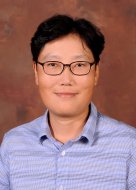
Kenneth Kwon
Associate Professor
Academic Appointment(s)
Medical College of Georgia
Department of Cellular Biology and Anatomy
Administration
Department of The Graduate School
- KKWON@augusta.edu
- (706) 721-0379
- CB 2820
Education
-
Ph.D., Physiology, Pathology, and Rel Johns Hopkins University, 2005
Awards & Honors
-
Emerging Scientist Award MCG/ Augusta University, 2020
-
FASEB Scholarship FASEB Acute Kidney Injury, 2019
-
Carl Gottschalk Career Development Award American Society of Nephrology, 2016
-
Outstanding Research Junior Faculty Award Medical University of South Carolina, 2016
-
Postdoctoral Research Award CTSI Howard Hughes Medical Institute , 2012
Courses Taught Most Recent Academic Year
-
CURS 4990
Undergrad Research III
-
ANAT 8120
Cell Biology Techniques
-
ANAT 8090
Current Topics in Cellular Bio
-
ANAT 9020
Seminar in Cell Bio/Anatomy
-
CURS 3990
Undergrad Research II
-
BIOM 8022
Molecular Cell Biology
-
CURS 2990
Undergrad Research I
Teaching Interests
Cell Biology; Molecular Biology; Gross Anatomy; Histology
Scholarship
Selected Recent Publications
- Nanoplastics target lung monocytes, disrupting immune dynamics, 2026
Journal Article, Academic Journal - Hypermethylation leads to the loss of HOXA5, resulting in JAG1 expression and NOTCH signaling contributing to kidney fibrosis, 2024
Journal Article, Academic Journal - Mature microRNA-binding protein QKI suppresses extracellular microRNA let-7b release, 2024
Journal Article, Academic Journal - Quantitative analysis of radiosensitizing effect for magnetic hyperthermia-radiation combined therapy on prostate cancer cells, 2024
Journal Article, Academic Journal - Autophagy activates EGR1 via MAPK/ERK to induce FGF2 in renal tubular cells for fibroblast activation and fibrosis during maladaptive kidney repair, 2023
Journal Article, Academic Journal
Research Interests
Our laboratory is dedicated to investigating the role of small bioactive entities—such as exosomes, nanoparticles, and microRNAs—in the pathogenesis and resolution of organ injury. These small molecules and vesicles have emerged as potent mediators of intercellular communication, capable of propagating injury signals or modulating tissue responses. Our current research centers on two fundamental questions: first, how they control tissue damage in acute and chronic organ injury, and second, whether their inherent biological properties can be engineered to mitigate injury and promote repair. By elucidating the dualistic nature of these entities—as drivers of pathology and potential therapeutic agents—we aim to uncover novel molecular targets and intervention strategies for organ protection and recovery .
College Service
-
Faculty Recruitment Committee 2024 - 2025
Role: Committee Member
University Service
-
IACUC Reviewer 2024 - Present
Role: Other
-
Biological Science Tenure-track faculty selection committee 2024 - 2025
Role: Other
Professional Service
-
Hong Kong RGC 2026 - Present
Role: Reviewer
-
Hong Kong RGC 2025 - Present
Role: Reviewer, Ad Hoc Reviewer
-
NIDDK 2024 - 2029
Role: Reviewer