Recruit • Train • Retain
Supporting the diverse health professions workforce throughout Georgia.

Recruit
18,000 total participants in 511 regional AHEC activities and programs
Learn about recruitment efforts by AHEC
Train
Facilitated 3,327 total student rotations in clinical pursuits across Georgia
Learn about training efforts by AHEC
Retain
Partnered with 1,139 professionals to mentor graduating students
Learn about retentions efforts by AHECAbout AHEC
A partnership coordinated by Augusta University, the Georgia Statewide AHEC Network is a complex, multi-disciplinary effort which responds to the problems of health professionals supply and distribution in rural and underserved areas of the state.
The Georgia AHEC system's goal is to increase access to primary care services in rural and urban underserved areas through the recruitment, training and retention of primary care health professionals. To this end, the programs' primary objectives are to educate community members about health career choices and recruit future health professionals, facilitate community based clinical training experiences for students and residents, and providing education and resources to assist and support health care professionals.
HistoryGA AHEC LocationsOur TeamFAQs
Contact Us
Area Health Education Centers
Health Sciences Campus
AA-1057
1120 15th Street
706-721-8331
706-721-8508
The History of AHEC in Georgia
View the AHEC development/funding/notable events timeline
In the 1970's, concern over the shortage of primary-care physicians in rural areas led to a Carnegie Commission on Higher Education recommendation to develop a system of Area Health Education Centers (AHECs). The goal of the AHEC program is to improve access to quality, primary health care in medically underserved areas through educational activities designed to recruit, train, and retain community-based health care personnel where they are most needed. AHECs are collaborations among colleges, universities, federally funded community and migrant health centers and sites serving rural and other underserved populations.
The system links communities, particularly rural, remote and underserved areas, with academic institutions to increase access to educational programs for health care professionals throughout the state. Through the AHEC system, these programs can be offered:
- Community-based training opportunities for students in varied health professions.
- Information services and continuing education opportunities for practicing health care providers.
- Health career information for middle and high school students.
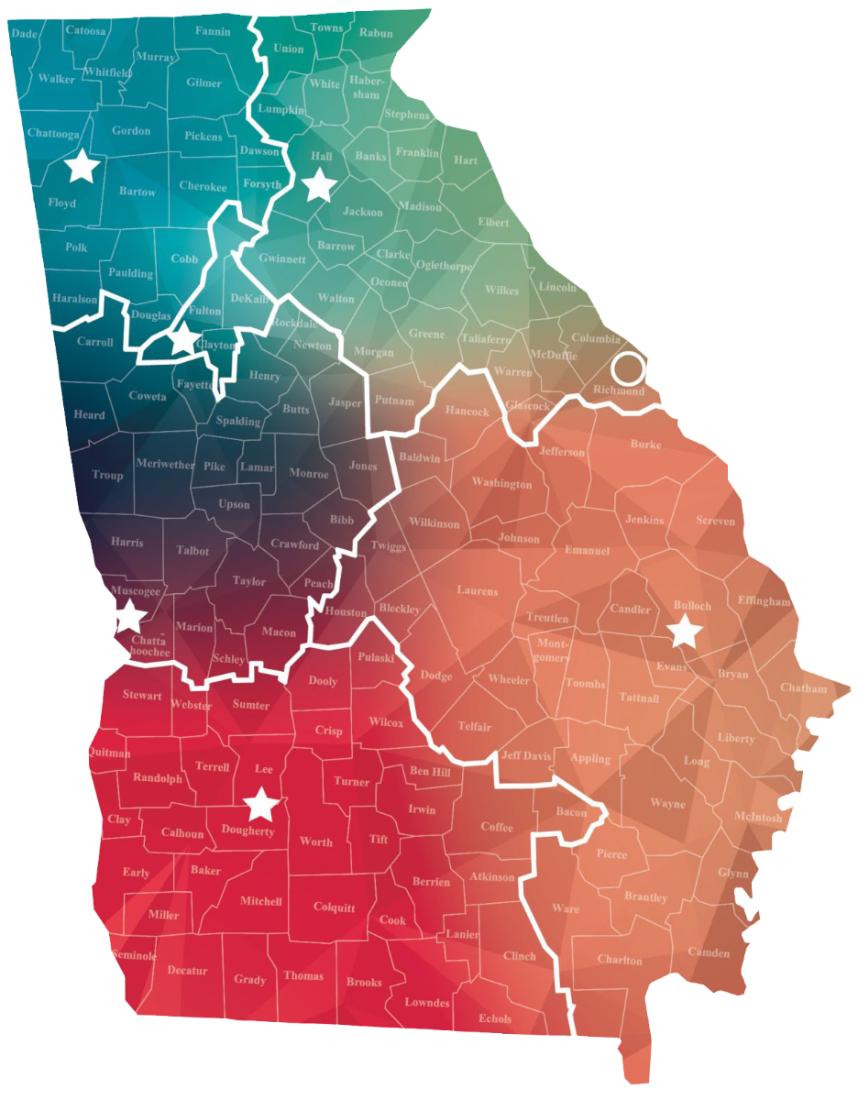
The AHEC program in Georgia was begun by Morehouse School of Medicine (MSM) in 1984 with the establishment of two centers, the Atlanta AHEC (serving three metropolitan areas) and the Tuskeegee AHEC in Alabama. The Atlanta AHEC was later changed to become the Southeastern Primary Care Consortium AHEC (SPCC-AHEC). The second center, the Magnolia Coastlands AHEC (formerly CHEP-AHEC), was begun in 1987 serving 39 counties in central and southeast Georgia. The Southwest Georgia (SOWEGA) AHEC was established in 1990 and serves 38 counties. The Three Rivers AHEC, established in 1994, serves 28 counties in west central Georgia.
Augusta University (then the Medical College of Georgia), in partnership with Mercer University School of Medicine, received a grant in 1996 to operate as a federally funded AHEC. This funding has supported the development of two new centers in northwest and northeast Georgia as well as overseeing the maturation of the Three Rivers AHEC. The program office at Augusta University coordinated the Blue Ridge AHEC in northwest Georgia, serving 20 counties. Foothills AHEC, serving 31 counties in northeast Georgia, followed in 1999.
The Program Office at Augusta University became the sole program office for Georgia in FY2018. Augusta University coordinates and manages this diverse partnership of schools, provider organizations and clinical practitioners.
Learn more about AHECs across the nation »
Georgia AHEC Centers
SPCC Atlanta AHEC
1720 Peachtree Street NW, Suite 440, Atlanta, GA 30309
Phone: (404) 815-4996
Center Director: Daphne Byrd, M.Ed.
Blue Ridge AHEC
7 Ivy Street NE, Rome, GA 30161
Phone: (706) 235-0776
Center Director: Caroline Aultman, MHA, MBA
Foothills AHEC
329 Oak Street, Suite 101, Gainesville, GA 30501
Phone: 770-219-8130
Center Director: Missy Lochstampfor
Magnolia Coastlands AHEC
PO Box 8146, Georgia Southern University, Statesboro, GA 30460
Phone: 912-478-1050
Center Director : Jane Nester, DPH
SOWEGA AHEC
1512 W. 3rd Avenue, Albany, GA 31707
Phone: (229) 439-7185
Center Director: Laura Calhoun, MHA
Three Rivers AHEC
2022 15th Avenue, Columbus, GA 31901
Phone: (706) 507-0894
Center Director: Crystal Hand, BS
Staff Directory
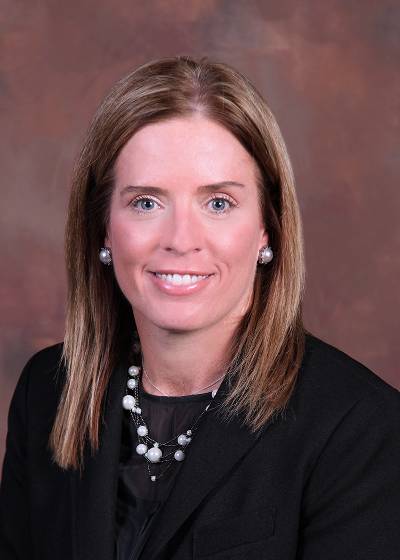


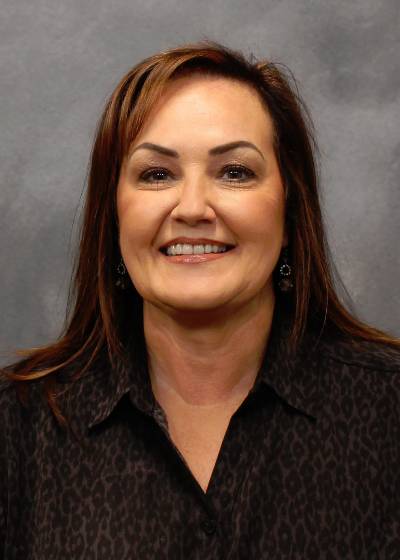
Darra Ballance, MLIS
- Director, Retention Programming and Technology
706-721-9902

Frequently Asked Questions
What Is An AHEC?
Area Health Education Centers (AHECs) were begun by the federal government in the late 1970's as programs designed to address health manpower distribution through community based initiatives.
How Are AHECs Structured?
AHECs are administered by a school of medicine, which is the program office, and subcontracts with remote centers from the medical school. Each center must be a 501(c)3 entity, governed by a Board of Directors representing the region surrounding the center. A program office may receive a maximum of twelve years of federal seed funding while the centers are eligible for six years of funding. The program office administers a multidisciplinary academic consortium that includes one or more nursing schools and schools of other health professions, such as allied health and social work.
How Are AHECs Funded?
The federal government, through competitive grants, makes seed monies available to establish AHEC programs and centers. The intent is to provide sufficient dollars to build the infrastructure and to build a case for state support assuming the activities and accomplishments are of value to the communities served by the AHEC.
What Is The Role Of The Community In AHEC?
Communities are the heart of AHEC. The centers are governed by a community Board of Directors who live in and represent the region served. These community boards identify the needs and priorities for health care professionals in their region within the scope of the broad AHEC objectives. The AHEC employees live in the center's region and are employees of the Board of Directors rather than of the academic partner. A minimum of 75% of all federal dollars awarded must be subcontracted directly to the centers, with the remaining financial oversight and to develop institutional support and linkages needed by the committee.
How Many AHECs Operate In Georgia?
There are six centers in our state. The Atlanta AHEC or Southeastern Primary Care Consortium AHEC (SPCC-AHEC) covers DeKalb, Fulton and Clayton counties. Magnolia Coastlands AHEC was begun in 1987 and serves 39 counties in central and southeast Georgia. The Southwest Georgia (SOWEGA) AHEC was established in 1990 and serves 38 counties. The Three Rivers AHEC, established in 1994, serves 28 counties in west central Georgia. The Blue Ridge AHEC in northwest Georgia serves 20 counties. Foothills AHEC, established in 1999, serves 31 counties in northeast Georgia.
Documents and Resources
- Reading list for students using AHEC housing during 2026 rotations
- Factors that influence physicians to practice in rural locations: a review and commentary, Journal of Rural Health
2023 Preceptor Satisfaction Survey
Serving Georgia’s Communities Since 1984